Call Now
9945840180

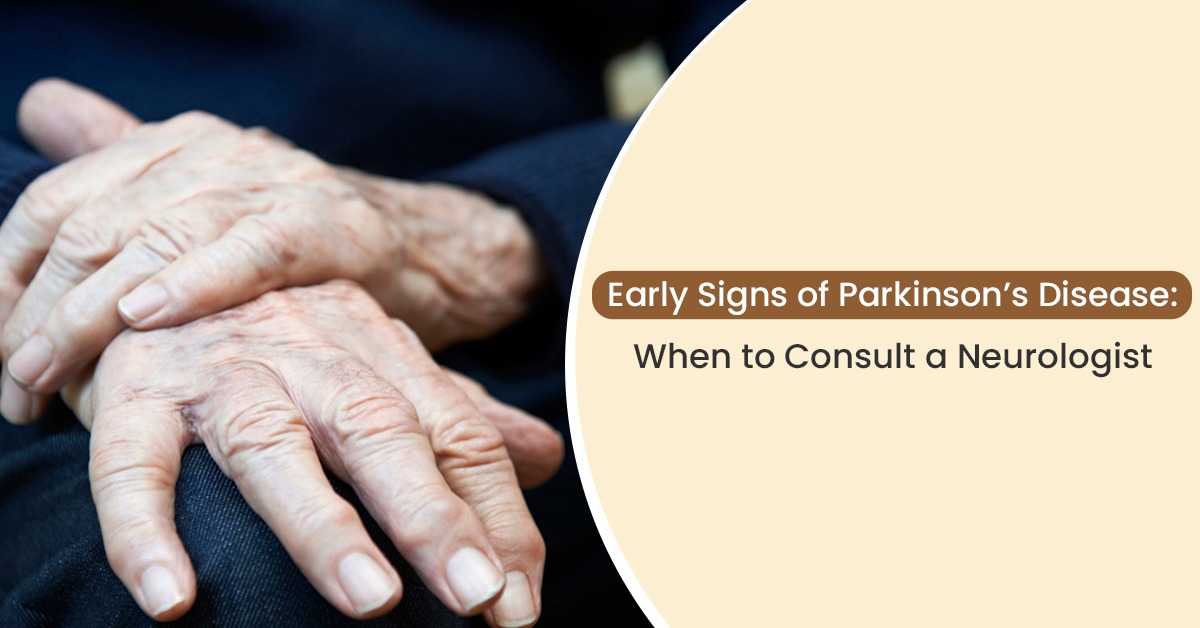
Early Signs of Parkinson’s Disease: When to Consult a Neurologist

The Importance of Bone Health and Parkinson's Disease

1. Introduction

Parkinson’s disease is a progressive neurological condition that gradually affects movement, coordination, and even emotional health. While it is most often associated with older adults, the first signs of Parkinson’s may appear long before the condition becomes disabling. In fact, research shows that subtle changes can develop several years before diagnosis, but many people dismiss them as part of natural aging or simple fatigue.

Recognizing these early signs of Parkinson’s disease is crucial. Early medical intervention not only helps in slowing down the disease’s progression but also ensures patients maintain independence and a better quality of life for as long as possible. This blog will help you understand what Parkinson’s disease is, the warning signs to look for, and when it’s important to consult a neurologist.

2.What is Parkinson’s Disease?

Parkinson’s disease is a neurodegenerative disorder that occurs when the brain loses its ability to produce enough dopamine, a chemical messenger responsible for controlling movement. Without dopamine, signals between the brain and muscles become weaker, leading to tremors, stiffness, and difficulty with balance.

Unlike sudden-onset conditions, Parkinson’s develops gradually. This makes it harder to notice in the beginning, as symptoms start small and progress slowly. While the disease is more common in people over 60, early-onset Parkinson’s can affect younger individuals in their 30s or 40s.

Globally, Parkinson’s disease affects around 10 million people, and with aging populations, this number is expected to rise. Understanding how to identify early symptoms can empower families to seek timely medical advice.

3. Why Early Detection Matters

Catching Parkinson’s early is not about preventing it altogether—since there is no cure yet—but about managing it better. Early detection matters because:

  • Medications work best when started early: Drugs like Levodopa and dopamine agonists can significantly improve symptoms if introduced in the early stages.
  • Prevents complications: Balance training and physiotherapy can reduce fall risks before mobility declines severely.
  • Preserves independence: Early intervention allows people to stay active and independent longer.
  • Supports mental health: Many patients with undiagnosed Parkinson’s feel frustrated or anxious about unexplained changes in their body. A diagnosis brings clarity and targeted treatment.

In short, early diagnosis helps slow down the decline, keeps patients functional, and allows families to prepare emotionally and practically for the future.

4. Early Signs and Symptoms of Parkinson’s Disease

Parkinson’s disease manifests through a combination of motor and non-motor symptoms. The following are some of the most common early signs:

  • Tremors or Shaking
    Resting tremors, especially in the hands, fingers, or chin, are often the first noticeable signs. The shaking typically occurs when the limb is at rest and eases when it is in use.
  • Slowed Movements (Bradykinesia)
    Bradykinesia makes normal daily activities, such as walking or eating, feel unusually slow. Patients may describe the sensation of being “stuck” when starting to move.
  • Muscle Stiffness
    Rigid muscles can appear in any part of the body, causing pain and limiting the range of motion. Unlike normal stiffness after exercise, Parkinson’s stiffness does not ease with rest.
  • Changes in Balance and Posture
    A stooped or hunched posture and increased unsteadiness are early red flags. This symptom increases fall risk and can make daily activities more challenging.
  • Small Handwriting (Micrographia)
    A sudden shift to smaller, cramped handwriting is called micrographia and is a distinct sign of Parkinson’s. It reflects changes in fine motor control.
  • Changes in Speech
    Speech may become softer, monotone, or harder to understand. Patients may also experience hesitations before speaking or reduced vocal variety.
  • Reduced Facial Expressions
    Known as “facial masking,” reduced ability to show emotions can make individuals appear sad, tired, or distant even when they are not.
  • Sleep Disturbances

    Vivid dreams, restless movements during sleep, or difficulty staying asleep may appear years before motor symptoms.

  • Loss of Smell
    Loss of smell, or anosmia, often develops long before tremors or stiffness begin.
  • Fatigue and Mood Changes
    Depression, anxiety, or constant tiredness are common early symptoms. Because these are non-specific, they are often overlooked or misdiagnosed.

5. When to Consult a Neurologist

If you notice a combination of these symptoms—especially tremors, stiffness, and slowed movement—it’s important to consult a neurologist. Neurologists specialize in conditions affecting the brain and nervous system and can provide:

  • A detailed medical history and neurological examination.
  • Diagnostic imaging tests like MRI or DaTscan.
  • A clear management plan that includes both medical and non-medical therapies.

Delaying consultation can result in progression to more advanced stages before treatment begins. Early specialist intervention is always beneficial.

6. Diagnosis and Treatment Options

There is no single test to diagnose Parkinson’s disease. Instead, neurologists rely on medical history, physical exams, and in some cases, brain scans.

Treatment options include:

  • Medications: Levodopa and dopamine agonists remain the gold standard for symptom management.
  • Surgical treatments: Deep Brain Stimulation (DBS) can help in advanced cases where medication is less effective.
  • Therapies: Physiotherapy, occupational therapy, and speech therapy improve mobility, independence, and communication skills.

Ongoing care is essential, as treatment must be adjusted over time to match the disease’s progression.

7. Lifestyle Tips for Managing Early Parkinson’s

Living with Parkinson’s can feel overwhelming at first, but lifestyle adjustments play a vital role in improving day-to-day life:

  • Exercise regularly: Activities like walking, swimming, yoga, or tai chi improve balance, coordination, and flexibility.
  • Balanced nutrition: A diet rich in whole grains, vegetables, fruits, and omega-3 fatty acids supports brain health and digestion.
  • Stay mentally active: Puzzles, reading, or learning new skills keep the brain stimulated.
  • Good sleep hygiene: Regular sleep routines help reduce fatigue and improve mood.
  • Emotional support: Joining support groups or counseling can reduce stress and depression.

Combining medical treatment with lifestyle changes ensures a more holistic approach to managing Parkinson’s disease.

8. Final Thoughts

Parkinson’s disease is not just a movement disorder—it affects the whole body, including mood, sleep, and overall well-being. The earliest signs may appear subtle, such as tremors, small handwriting, or loss of smell, but these should never be ignored

By paying attention to these early symptoms and consulting a neurologist promptly, patients can access effective treatments, preserve independence, and improve their quality of life. While Parkinson’s remains a lifelong condition, early intervention provides hope, better outcomes, and a pathway to living well despite the diagnosis.